The
Big Bang and the Black Hole's Role in the Universe
Short
Summary
Alt. Version for Printing
|
Brief: Astrophysicists are still exploring many new avenues when it comes to their
theories on the Big Bang, expansion of the Universe
and where Black Holes fit into the total picture. It has been proposed that
Black Holes are the gravitational source resulting in a
Wormhole pathway to some parallel or new universe in which matter and
energy can move between. That it may be a source of gravitational force
responsible for spatial and time distortions.
It has been stated, "The standard big bang models describe an expanded universe
with no center and this is consistent with all observations". Let’s look at some of the current theories related to the Big Band, the
expansion of the Universe from a singularity, the presence of Cosmic Microwave Background
Radiation, Black Holes and applied new approaches or
alternate view for a fresh perspective of what happen at the start of our known Universe.
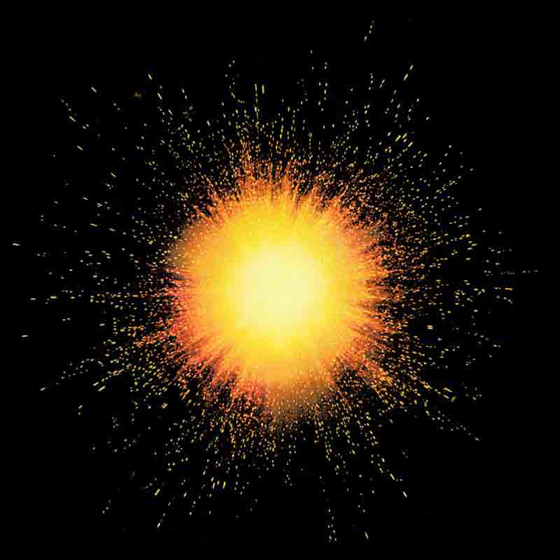
Illustration courtesy of:
http://lifeboat.com/ex/technological.evolution |
|
 |
The Big Bang, is currently the
most
accepted theory, which resulted in the alleged creation of the Universe from a singularity
of infinite density and temperature with a finite mass. Some state there was
more than one singularity that just started to inflate rather than explode. The
model presenting multiple points of release for singularities does not support
the properties of infinite density, temperature and a static amount of mass. How would space and time initiate in various locations, what
would keep the singularities apart as the force of gravity approached infinity? Thus,
the set of proposed events
related to the initial Big Bang and the subsequent expansion of the Universe did not occur
according to mankind's theories.
How is this
so? There is evidence, which leads to the idea that the galaxies and space
itself is expanding with the furthest objects moving away from each other at the
highest velocities. Verification of this expansion was backed by measured Red Shift of many
outlying cosmic objects. Scientists have recorded
cosmic microwave background radiation that
seems to indicate it is a remnant heat effect emanating from the start of the Universe. We have
been told the laws of Physics do not apply when a mass goes to infinite density,
temperature, and the volume approaches zero. There is no answer of where the
singularity originated, the trigger for expansion, the coordinated release of
the other singularities and how could the mass and energy of the Universe be
compressed and held to an infinite density and temperature? Lets look at these sequence of events leading up
to the Big Bang which are valid and why exceptions were made with the current laws of Physics.
Mankind has made several correct
assumptions about the origin of the Universe and the Big Bang. All present
cosmic objects did originate
from a cosmic expansion unlike any expansion of mass and energy witnessed by mankind
and it does collapse back upon itself, thus the process of renewal. Although what is
presently known about the process of creation, has been based on little understanding of
the Universe. You were told over 50 years ago by one of your most respected
scientist to look towards nature for even your most
complex answers, for almost all processes are based upon the simple that you see about. So
was there a Big Bang? The answer is yes. Did this event initiate from a
singularity? The answer is no. So lets give some insight on just what did
happen.
The first concept accepted
by academia is the singularity, yet its concept is counter to all established
rules of physics. There are no exceptions without reason. To state that as a
mass shrinks due to gravity, which again is not understood in current text books
to a point where volume approaches the current definition of zero is this a sound
idea?
Gravity and how it
behaves on a subatomic particle level, is not understood under current
technology. It is due to particle clumping within the core of the host
mass. The process once saturated expels in bursts and allows a continuous field
to flow inward as replacements all the while applying a force when a particle
passes through a mass in the direction of travel towards the core of the host
mass. It is these subatomic particles that are dependent upon mass to increase
their flow thus increasing gravitational flow. As long as there is a source of
matter within range of a large gravitational source, which can be captured or
assimilated, there is chance that the mass can evolve and could initiate a Black Hole.
The problem with the
singularity model is related to the weak
force of gravity, now how can this force compress the nuclear force residing within the atom to where
its density approaches infinity and the volume of the corresponding mass of the
universe also
approaches zero or null. This concept is false.
As a star collapses, its mass compresses and the gravity sub-atomic
particle flow within the core accelerates as a result. It is the gathering of
mass that increases the gravitational flow. The same amount of gravity particles
still clump in a now smaller mass as a result the field replacement rate
particles in vs. ejected increases thus the increased gravitational field.
Gravity, ultimately responsible for the
formation of a Black Hole as it assimilates all matter within the reach of its
increasing field. Does not nature destroy, compress and breakdown the
waste, then burst into regeneration as a natural recycling process? All laws in
nature follow the same path. The Black Hole is present at the center of almost
all galaxies
for a reason.
Mankind is correct that the Cosmic Microwave
Background Radiation is a remnant of the event. If this is so, then why am I
presenting an alternate view? The Cosmic Microwave Background Radiation gives
the first clue. The Big Bang has been recently proposed to have occurred in no
one location and thus expanded, again this is negates the singularity theory,
thus no Big Bang. A single event would have created no temperature differentials
when dissipating evenly about the spatial universe. Can you match the variances
to a relative a cumulative group of masses within the area of the anomaly? If
not, any variable related to temperature would be undetectable with current
technology. The pattern of minute hot and cold spots identify a pattern of not
one, but what in essence an almost infinite amount of Big Bangs about the total
Universe, seen and unseen. The regeneration is centered around the
local Big Bang and its source of initiation, the Black Hole.
Local Big Bang is
initiated by a Black Hole, where as it approaches the end the of its life cycle
at the center of a galaxy, assimilation of the mass of stellar objects and
dormant cosmic mass increases at an exponential rate. Gravitational compression
and the energy provided by the rapid assimilation introduced, exceeds the ability for the
Black hole to vent the energy as theorized by some scientists, resulting in
explosive expansion of all captured matter.
The galaxies
within the universe position and move about each trying to achieve an
equilibrium. The Big Bang occurs on a local level where the galaxy or, and its
subcomponents are affected. This is how the Universe recycles and why there is a
variation in the Cosmic Microwave Background Radiation. So why the many varied
shapes of galaxies and what is responsible? There several factors pertaining to
the Black Hole, which control the shape and size of galaxies and some cases
satellite formations related to a common gravitational central point.
Once gravitational cannot vented from the core of the Black Hole pressure
builds past the containment of the outer mass and a catastrophic expansion of
the what was a black hole now is initiated local Big Bang on the galactic level
of cosmic mass. The preliminary distribution of ejected mass for a galaxy and or
its sub-components are dependent upon 2 primary factors, rotational torque and
the condition present about the axis of rotation of the mass responsible for the black hole
just before the localized big bang commences.
The axis of rotation is very important on the low end of the mass's rotational
torque as the axis between the poles
provide an initial avenue of least resistance. This why the periodic bursts of energy
emitted are from a growing black hole's poles. A big bang starting under this
condition would have mass ejected at a greater frequency along the axis instead of
the equator of rotation of the mass related to the black hole, creating an
elliptical galaxy. As rotational torque increases there is a shifting of least
resistance moving away the axis containing the poles to the equatorial plane.
This results in galaxies moving from elliptical where the polar axis is
represented by the z axis and the circular equatorial plane, represented by the
x-y axis. As torque increases the relationship of the z axis, which is longer to
the x-y circular plane approaches each other as a factor of rotation of the
black hole. Many times the circular plane and the z axis are in equilibrium thus
the creation of spherical galaxy. As rotation increases exponentially this
shifts the path of least resistance along the equatorial circular x-y plane. It
is this relationship that is responsible for the many variations of spiral
galaxies.
As we know there are many variations of spiral galaxies, how do
we address the these different formations? This is a little more complex and is
dependant upon the residual torque in relation the remnant mass left after the
black expands past its containment, the local big bang. This is why black holes
quickly form in the center of galaxies just after creation. It is not by
accident this happens, but by the design of the universe. The black hole is
established by matter expanding away from the point of initialization, the
counter matter pushed into a temporary central static position coalesces, first
it cools and collapses upon itself creating the central gravitational source
controlling all matter related to the newly formed galaxy. The rotational black
hole vents repulsion particles along equatorial plane and torque determines the amount of venting
points with the slowest period creating opposing bi streams. This is the source
or the varying amount of spiral arms observed in these type of galactic
formations.
It’s the Black
Hole that is responsible for expansion and contraction in the Universe, but it
occurs in galactic sectors as a local big bang in random intervals. Galaxies are
not expanding away from each other, but move about one another at static
distances as the forces of gravity and repulsion between the galaxies maintain a
equilibrium. This is what Human scientists have not discovered yet. Black holes
are not pathways to other universe, nor do the distort space and time. Gravity
acts upon mass, not a 3 dimensional area of space. Compression of the fabric of
3 dimensional space does not occur. If this statement were true, we would detect
a small variation in the volume of a defined mass with stable parameters, when a
varying force of gravity was applied. The primary forces emanating from a black
hole is gravity and repulsion, it is that force that bends and captures light,
and maintains the spacing between similar sized galaxies. The progression of
time is also not effected, but gravity on occasion modifies results from
measuring devices. The Black Holes are gravitational hot spots, where mass of
galactic proportions are gathered and compressed. There is a collection of all
forms of energy, matter, this includes dark matter (subatomic particles relation
to the formation of the basic particles present in the universe), and that which is the
essence of life. The resultant gravitational force is so large it finally
restricts movement on the molecular level. A build up occurs, and overwhelms the
containing gravitational force of the black hole, initializing a localized Big
Bang in that sector of the Universe releasing matter and energy, setting the
clock back to zero. The process of these gravitational hot spots (Black Holes)
and localized Big Bangs (expansion zones) is the way the Universe attempts to
find that state of equilibrium, but never will. So how does a Black Hole
expanding from a big bang and Super Nova differ? In the formation of a Black
Hole, the total mass of the dying star produces a gravitational force that
contains the heat from molecular motion and the explosive force of the unused
hydrogen is dampen by the accumulation of heavy elements under compression in
the core and continues to grow. It is the growth of the black hole and its
gravitational effect on the core that initializes the big bang. In a Super
Nova, the star shrinks, from the reduced fusion process in the core, which has
slowed from a lower hydrogen fuel ratio to heavy element dampers. Thus reducing
molecular movement and the consequence is cooler solar mass. A domino effect
occurs as a solar mass collapse ensues. The core compresses to a point where
unused hydrogen pockets are forced together. A sudden increasing in the fusion
process start in motion, which heavy elements in the core cannot dampen. The
gravitational force produced by the mass cannot counteract the increased outward
pressure emanating from the core. There is a containment breach that results in
a catastrophic event.
Another well-excepted theory scientists used to explain the expanding
Universe is the balloon theory. Where the fabric of space and time is expanding like the surface of a balloon being inflated.
This is an abstract 2 dimensional plane
the surface of the balloon used to describe the expansion of a 4
dimensional local universe. Taking the pieces that seem to fit and ignoring the
rest when building this theory.
Lets look a several bullet points of Mankind's Balloon Theory
The following information was provided by
the website:
http://crib.corepower.com:8080/~relfaq/centre.html
-
The 2-dimensional surface the balloon is analogous to
the dimensions of space
-
The 3-dimensional space in which the balloon is
embedded is not analogous to any higher dimensional physical space
-
The centre of the balloon does not correspond to
anything physical
-
The universe may be finite in size and growing like
the surface of an expanding balloon but it could also be infinite
-
Galaxies move apart like points on the expanding
balloon but galaxies themselves do not expand because they are gravitational
bound.
Close examination of the balloon theory, a
alternate representation of the big bang shows that expansion is greatest at the edges
of the spatial universe and
slowest near the point origin of measurement with no established center. So in an expanding universe, any point used as a
reference, would show all masses moving away. This all looks good on paper, but
does not address the would be void at the center of the initial big bang that should have
been found or detected by scientists. So an adjustment has been made that there
was no clear point of initiation, if so this cancels the concept of a
singularity. Also, galaxies are found clumped in
unexplainable formations. So amid the many inconsistencies and exceptions there
are concepts that have merit?
Yes, so how could this theory be revised to give an explanation closer to what
happens in a Big Bang? The mistake made in the Balloon Theory, was linking the
3 dimensional spatial universe to be represented as a 2 dimensional surface
curved plane of an expanding balloon. Lets now look at
an alternate view where the surface of balloon as the leading edge of matter ejected from the Big Bang.
The spatial fabric of time and space is represented by the expanding volume of
the balloon instead of its surface. While within the balloon matter from the Big
Bang expanding outwards also seeks equilibrium, thus spreading somewhat evenly
about the interior volume. This creates no hole at the point of creation, allows
for clumping in hot spots and corresponding areas of void as matter in motion
does not spread evenly, but tends to gather or disperse according to relative
pressures within the spatial volume. Stellar clumping and mergers occur when as
a result of gravitational attraction and a force still under considered
repulsion.
The Red Shift was brought into the forefront by
Hubble, the observation of this effect on distant cosmic objects seems to
support the theory of a expanding Universe. Stating that the further away the
object in question in the Universe there a proportionally greater the shift
towards the red end of the spectrum. So if the most distant
galaxies are moving away in what seems to be an expanding Universe initiated by
the Big Bang, where does
the truth reside?
Current observations do show a red shift with
galaxies at an extreme distance, but what is the source of this shift? The
red shift for outlying objects does increase proportionally as a function of
distance, but it not from the assumed source accelerating velocities of galaxies
at the extreme expansion edge of the Big Bang. So what causes the red shift from
distant galactic light?
The path of
a light subatomic particle as it streams through space is affected by close
encounters related to passage by or through the strong gravitational fields of the
various cosmic galaxies.
Even though this is a random event over vast distances there is a stable
relationship as the degree of red shift is a function of distance from the
source of light.
Let's examine
how a stream of photons moving in a wave like format through the
gravitational field near the surface of a cosmic object interact on a subatomic particle level. Before
starting 2 prerequisites need to be reviewed, first basics in
particle movement and the how the
gravity subatomic particle affects another
subatomic particle.
In this basic example of
how gravity subatomic particles affect the path of a light photon subatomic
particle can be
observed on Earth during dawn and dusk. If so, why and how and what can we look
for? Gravitational subatomic
particles returning to a mass can affect natural particle movement, when there
is sufficient mass as exhibited by the Earth. The greatest opportunity occurs
when a source of light's path is moving somewhat parallel and just above the surface of
the mass. The interaction between gravity subatomic particles returning to a
mass and a passing stream of photons is different than when a gravity particle
passes through a mass, thus applying a force in the direction of movement. It is
crowding that results and it is this subtle deflection that affects the stream of particles
moving across the field of incoming gravity particles. The first effect is
deflection away from the axis of direction, thus expansion of the original
incoming photon stream field. Definition:
[axis of direction, as
subatomic particle moves, there is basic motion about the x, y, z axis. The
particle vibrates back and forth, limited pressures that reverses the field of
direction along 2 of the axis, the axis of direction usually assigned to z axis
designates forward motion which is an equilibrium between the forward motion of
the particle and the field it transverses]. This deflection away from the axis due to crowding
slows the process of streams of photons natural pattern of crossing back and
forth across the z axis thus artificially stretching the wavelength
and overall spreading the cross sectional area of the original stream. This is why the
Sun when viewed at the horizon, its light is shifted to red. The Moon exhibits
the same phenomena, but same process occurs leading to a different result. The
Moon and its reflected sunlight does not turn red, but a soft yellow, why? The
reflected light does have a large red component, but the affect still expands
the size of the object and stretches the off white light frequency to a soft
yellow. Expansion of the size of an object is due to the influx of gravity
particles into the stream responsible for the image the crowding separates and
increases the cross sectional area and slows the frequency. This why as the
stream carrying the image moves away from the surface or horizon the color and
size of the image returns to normal as a decreasing function of the
gravitational field affecting the stream of photons.
Mankind
proposes that the image of the Sun and Moon as they appear near the horizon is
an optical illusion, do other objects appear larger when viewed from the same
zone? No. How is it that the size of the Sun and Moon are consistent among
viewers and photographs. Why the size of the image decrease in size and return
to normal as it moves away from the horizon within a small portion of its arc towards the Zenith? An illusion does
not answer any questions, but opens more. This concept to explain the unknown
needs to
be dropped, but still leave the door open to other ideas and theories. We needs
to understand what needs modification versus what needs to be completely
rethought.
Update
October 2005: A recent discovery (press release)
by the deep field Hubble Telescope
has imaged a galaxy 8 times the mass of the Milky Way, but only 800 million
years older than the Big Bang. According to current theories this should not
exist, thus leaving the door open to now consider other explanations.
I have no
answer for the creation of Universe, my personal feeling is that God is behind
it and it is infinite in scope and levels with no beginning and no end.
All Rights Reserved: © 2000, 2005,
2009
Mankind's
Explanation for the Big Bang
Mankind's
Explanation for Black Holes
Return
to Title Page